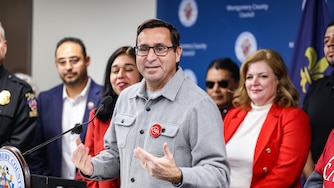
George Escobar will take the helm of one of the nation’s best-known immigrant advocacy groups during the fiercest immigrant crackdown in recent American history.
As executive director of CASA, which is based in Hyattsville, Escobar will set the course for the nonprofit as the Trump administration plows ahead with the detention and deportation of undocumented people nationwide.
Escobar has nearly 15 years of experience at CASA, which works in Maryland, Virginia, Pennsylvania and Georgia. The group’s influence, though, extends nationally. In federal court, CASA has defended temporary protected status, birthright citizenship and Deferred Action for Childhood Arrivals.
CASA was founded to serve Latino immigrants but has evolved to advocate for many groups.
Escobar’s father is from Mexico and worked in California fields before landing a union food services job. Escobar was raised in Los Angeles.
On Jan. 1, he will succeed Gustavo Torres, who is retiring after leading CASA for 34 years, during which he transformed it from a local to a national player.
Read More
In the days before he he begins his new job, we asked Escobar about the obstacles he faces as he tries to fulfill twin goals for immigrants: protecting their constitutional rights and helping them to lead productive and dignified lives.
This interview has been edited for length and clarity.
How difficult has the past year been personally and professionally as federal agents have stepped up detention and deportation efforts?
It is difficult because the pain is real and the fear is real. People are afraid to do mundane tasks. They are afraid to go to the grocery store. They are afraid to walk their kids to school.
People always have love for their countries of origin but also have hope when they come to this country that they can find some peace and an opportunity for a better life.
And to be faced with paramilitary troops that pop out of trucks armed to the teeth with the most sophisticated weapons in the world, pointed straight at your face, asking about your country of origin and where you are from — it is devastating.

What will be your biggest challenge as executive director?
The biggest thing is transitioning that fear into opportunities for community building and collective action. And helping our communities build leadership. And helping them understand how they can resist and how they can make this country a better country, a country that ensures that the laws get enforced and ensures that democracy and the promises of democracy are fulfilled.
President Donald Trump won two elections. What did you learn from that?
We didn’t bring enough people into the tent to really understand not only the threat that this president is, but really what the alternative was.
There was no vision for what that future could look like. It’s about the public overall and whether we’re offering a real alternative vision to this kind of neoliberal model that’s all about enriching the 1%, all about ensuring that the benefits of society are for a few.
For example, health care. Everybody should have access to essentials. Everybody should have access to affordable housing opportunities. Everybody should have opportunities for fair wages.
My time at CASA is going to further develop the relationships we’ve established, working in a deeper way with labor, in a deeper way with our African American allies, gathering from their experiences and coming together with a collective vision.
Is Maryland doing enough to protect and empower immigrants?
Maryland is off to a great start. Maryland has done well but has an opportunity to do more in the next legislative session — for example, the bill that limits local law enforcement from working with [Immigration and Customs Enforcement].
It is an important step for us to take. There’s an incredible opportunity now for the state to ensure there’s consistency in these policies. And there’s a commitment to model effective policing policies, meaning immigrants can have the confidence that, if they’re a victim of a crime, they can call police without any fear that it is going to lead them to deportation.
How will you deem your tenure as executive director a success?
What I hope to accomplish is to really deliver on the expectations and the agenda that I’ve heard from our supporters. Their No. 1 message has been we don’t want to experience this again. We need to ensure that this doesn’t become a cycle, that we don’t bring in leadership at the federal and local level that is not able to deliver on their promises, which leads to vulnerabilities that then allows for right-wing ideology to take hold.
CASA has to do everything possible to ensure a pathway where people are treated with dignity and respect and have an opportunity to remain in this country.
Are you afraid that being a high-profile organization will lead to retribution from federal authorities that could hurt immigrants and their families in Maryland?
That’s the excuse. That’s what we’ve heard from across times in any of these social struggles. In the fight for justice, there’s always going to be risks. There are threats against those who try to ensure that the government is held accountable.
At the end of the day, we are asking, we are demanding, that our federal government obeys the law and abides by the Constitution. It’s really a low bar. If that is a threat, that’s unfortunate.
If they decide to exact retribution to anybody that demands that, they’re going to start going after everybody. This is not just the demand of one organization. This is not just a demand of one person. These are the basic expectations of every individual who finds themselves in this country.




Comments
Welcome to The Banner's subscriber-only commenting community. Please review our community guidelines.