Some leading Democratic state lawmakers are putting forward a package of corporate tax reform, legalized internet gambling and fee and toll increases to balance the state budget and pay for long-term promises on education and transportation — setting up a potential fight with other Democratic leaders who are opposed to raising more money.
The budget drama that’s been brewing in Annapolis for several weeks ratcheted up on Friday, as leaders held dueling press conferences about their visions for how to spend public dollars.
Here’s a breakdown of what’s going on in the State House.
The House of Delegates wants to raise money
House of Delegates leaders announced plans to raise more than $1.3 billion per year, calling it an important step to pay for the state’s priorities.
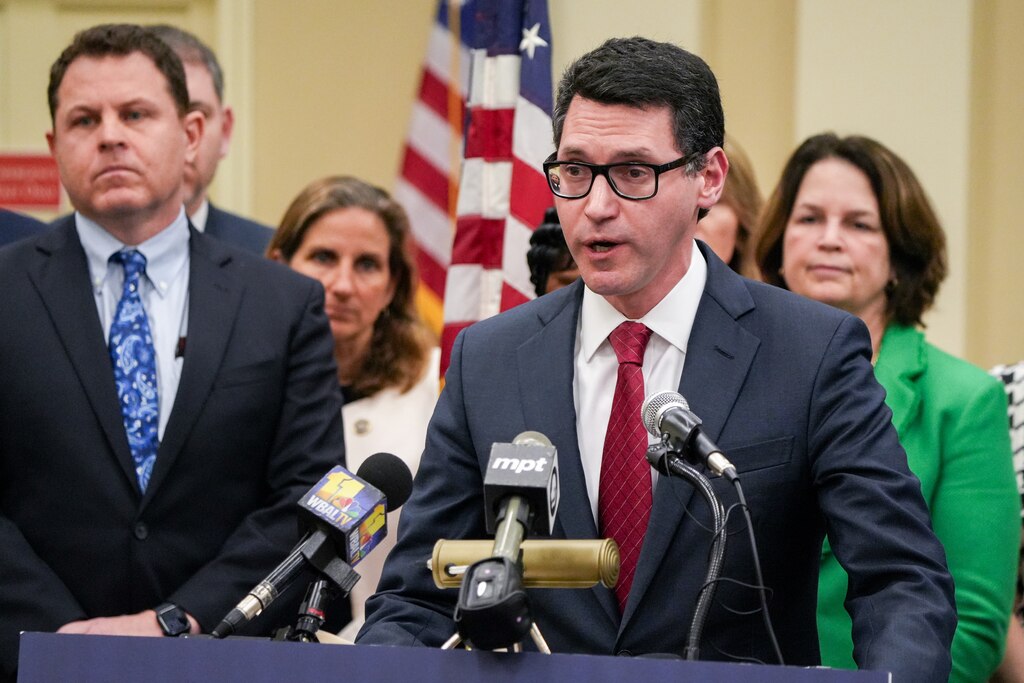
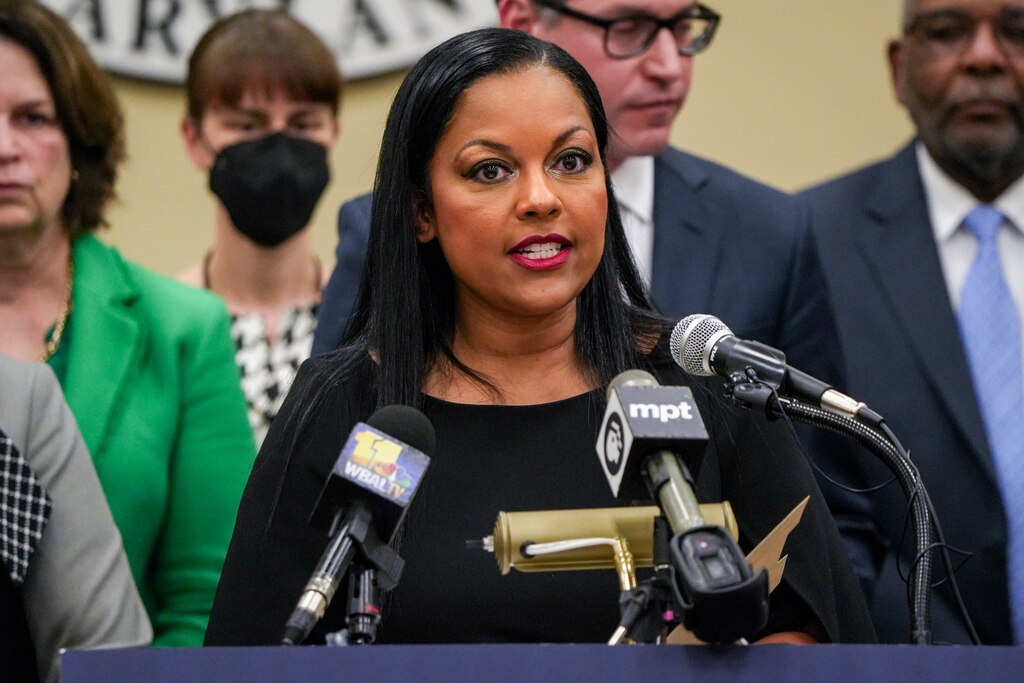
“We can no longer rely on quick fixes or short-term approaches. They will only land us right back in the same place next year,” House of Delegates Speaker Adrienne A. Jones said Friday. “At this point, we know what the solution is and it is finally time that we just say it: The answer is revenues.”
“Revenues,” in government budget-speak, is a catchall term for money that comes into the state’s coffers, typically fees and taxes.
Jones’ leadership team is moving forward with more than $1.3 billion worth of new and expanded revenues. They are not planning any broad-based increases to income taxes or the sales tax, but have laid out approaches that will hit many Marylanders’ wallets.
Here’s what they’re proposing:
- Legalizing internet gambling, also known as “iGaming”: $300 million
- Changing vehicle registration fees so that large vehicles pay more: $250 million
- Enacting a corporate tax reform known as “combined reporting”: $225 million
- Applying the vehicle excise tax to trade-ins: $155 million
- Increasing the vehicle excise tax from 6% to 6.5%: $100 million
- Increasing a vehicle registration surcharge to fund trauma centers: $85 million
- Increasing tolls: $75 million
- Adding a 75-cent fee on rides through ride-hailing services like Uber and Lyft: $45 million
- Increasing fines for endangering road workers: $30 million
- Increasing registration fees for electric vehicles: $20 million
- Adding an excise tax on firearms and ammunition: $20 million
“That’s the basic components to fund public education and transportation in the state of Maryland. It’s not just numbers,” Del. Marc Korman, chair of the House’s transportation committee, told reporters.
Education and transportation are two areas of the state budget that have expensive, long-term commitments.
The Blueprint for Maryland’s Future is an ambitious and expensive, multiyear plan to improve public schools through actions such as increased teacher pay, expanded prekindergarten and improved college- and career-readiness programs. The plan was passed in 2020 with only a partial plan to pay for it, and the costs of the programs will increase in future years.
The Blueprint fund is expected to run short of money in two to three years.
Meanwhile, the state’s budget for transportation construction project also doesn’t have enough money for all the projects envisioned in future years.
By putting forward a plan to raise money for future needs, House Democratic leaders are taking a long-term view of the budget.
“We can’t pretend that these things don’t cost money,” said Korman, a Montgomery County Democrat.
Senate firm on no taxes
Leaders in the state Senate, meanwhile, have already approved their version of the $63 billion state budget without any significant tax or fee increases.
Instead, they relied on the Rainy Day Fund and pulling money out of a fund that collects cash when taxes on stock market gains come in higher than anticipated.
As House Democrats were holding their press conference, Senate President Bill Ferguson spoke to reporters across the street.
Ferguson said Marylanders are feeling the pinch of “sticky” consumer costs as the nation recovers from record high inflation.
“People are concerned and we need to recognize that as legislators, and do our job to be fiscally prudent and disciplined and use the resources that we have available to us to do exactly what we did: Balance the budget and invest in our core priorities,” said Ferguson, a Baltimore Democrat.

Ferguson said the Blueprint education program has enough money for the next few years, and the state should use that time to focus on growing the economy and increasing the tax base by getting more people into the workforce.
Ferguson remained confident the state would meet financial goals in the future even as broader economic cycles ebb and flow.
“Things go up and down, we’ll adjust. But fortunately, we’re not in that place right now,” he said. “We’re in a place where we have fully met all of our commitments, and we will in the future.”
Where does the governor stand?
The other major player in the budget equation is Democratic Gov. Wes Moore, who proposed a budget to lawmakers that was in balance without any tax increases.
“The governor has been clear on this issue since day one — he introduced a budget that included record funding for public education, child care and to our local law enforcement offices all without raising taxes,” Moore spokesman Carter Elliott IV said in a statement.
He continued: “Any conversation with the General Assembly around taxes is going to have a very high bar for the governor, and any of those conversations will focus on creating fiscally disciplined ways of making Maryland’s economy grow.”
Elliott said the governor looks forward to “continuing ongoing conversations” with lawmakers “to create solutions.”
Negotiations ahead
Lawmakers have only a few weeks to hash out their very different perspectives about state finances.
The Senate approved its version of the budget, and the House of Delegates will follow with its plan next week.
With significant differences likely, the two versions of the budget will head to a conference committee where a small, bipartisan group of senators and delegates will work out their differences.
At this point, neither side seems willing to bend much from their position. The only areas of general agreement are raising registration fees to some degree on electric and hybrid cars, as well as raising money for the state trauma system through vehicle registrations, a tax on guns and ammunition or both.
Another factor at play is opposition to internet gambling, which a coalition of labor unions and Republicans spoke out against during a news conference on Friday as protesters nearby shouted for a cease-fire in the war in Gaza.
Republican lawmakers cautioned that having gambling on phones and computers will draw away from casino gambling — which they say will lead to a loss of jobs at brick-and-mortar casinos and a loss of money flowing into the state.
“It’s a bad bet for Maryland,” said Del. Kathy Szeliga, a Republican representing Harford and Baltimore counties.
The clock is ticking: Lawmakers are supposed to pass the budget through both chambers by April 1, and certainly they must get it done by the time they adjourn their 90-day session at midnight on April 8.


Comments
Welcome to The Banner's subscriber-only commenting community. Please review our community guidelines.